When William Wordsworth was wandering lonely as a cloud (around Glencoyne Bay in the Lake District on 15 April 1802, according to a post on Poemanalysis the chances are there were already a few hybrids among the host of golden daffodils he saw.
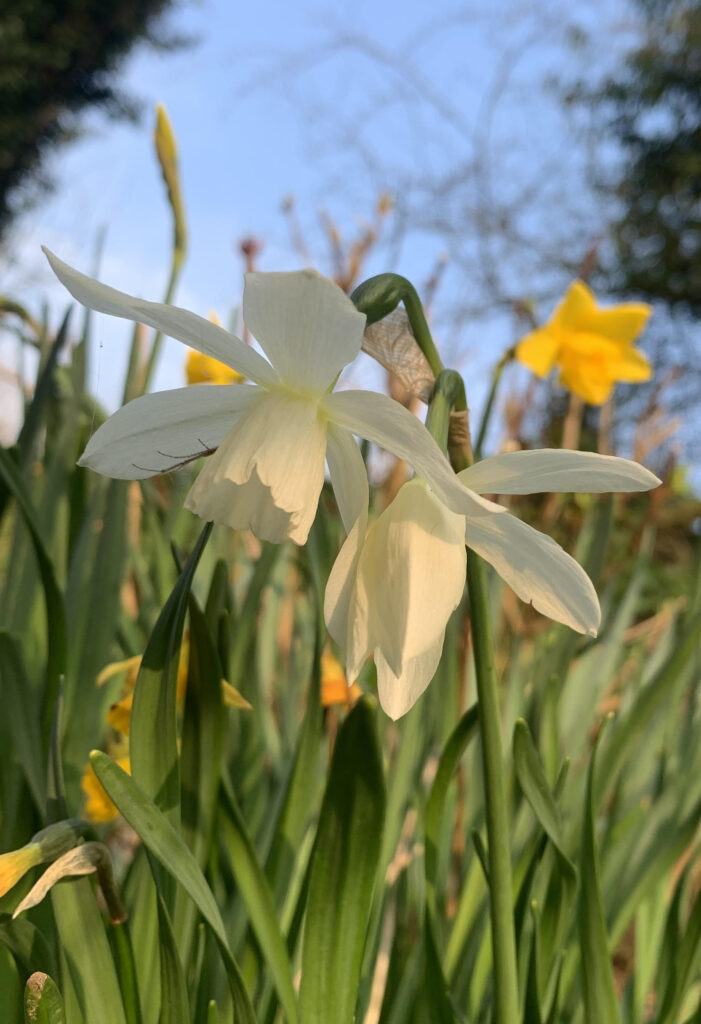
Wordsworth’s poem came to me, and inspired ‘Narcissus’ when I saw a crowd of golden, yellow, white, orange and other exotic daffodils in Somerset 220 years later. Of course, his classic romantic poem is in iambic tetrameter. Mine has a different rhyme scheme and a rather uneven meter, which reflects my mood and gait when stumbling across a field amazed by the variety of flowers.
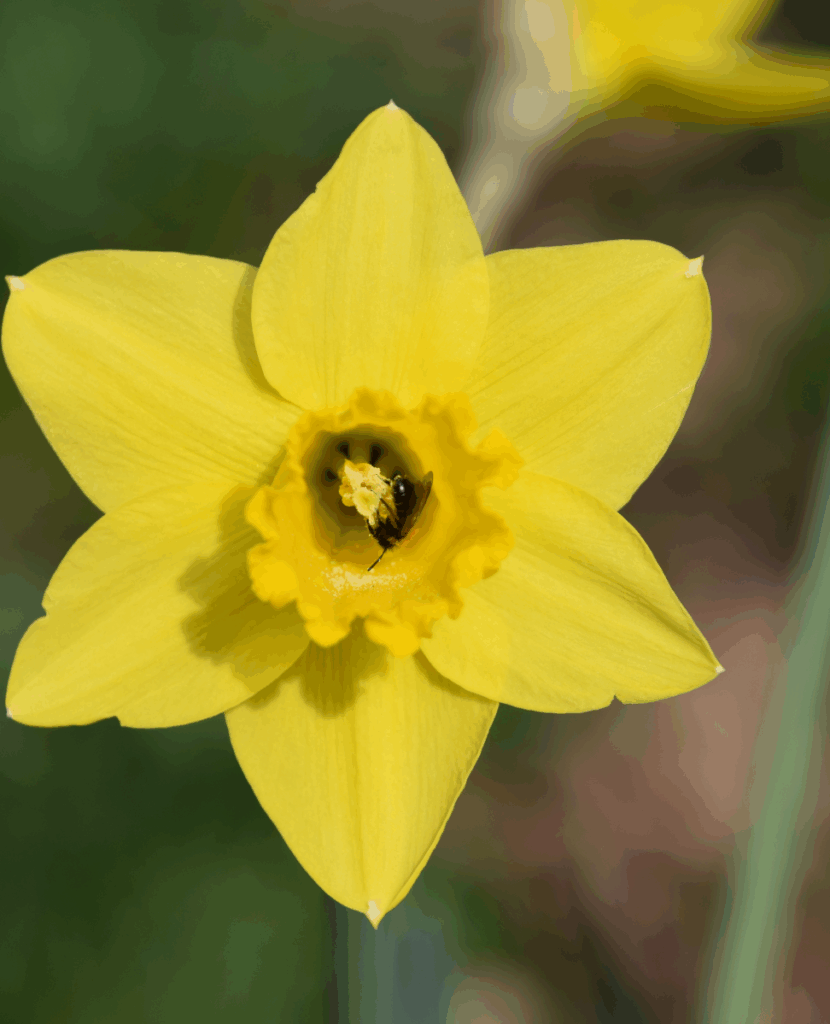
The daffodil, narcissus, originated in Europe and North Africa. It is estimated that there are up to 200 species. Narcissus pseudonarcissus is a wild daffodil native to England and still found in the meadows and along verges of the southwest of the country. It is an early source of pollen that attracts bees and benefits from bees for pollination.
Daffodil cultivation started 100s of years ago but became very popular in the 19th century. Breeders often hybridise daffodils for competition and sale. They select specific traits from different varieties and propagate them from bulbs. This process enhances desired characteristics, such as large or complex blooms and diverse hues. Sadly, it can sacrifice other traits that attract bees, such as scent and production of pollen and nectar. It also minimises reliance on pollination. Daffodils can self-pollinate due to the proximity of their stamens and pistils but cross-pollination with the help of bees can lead to stronger, more diverse plants. A foraging honeybee needs to visit 1,500 flowers to collect one load of pollen, so if the meadows and verges are covered in hybrids, the bee has to travel further and for longer to reach her target.
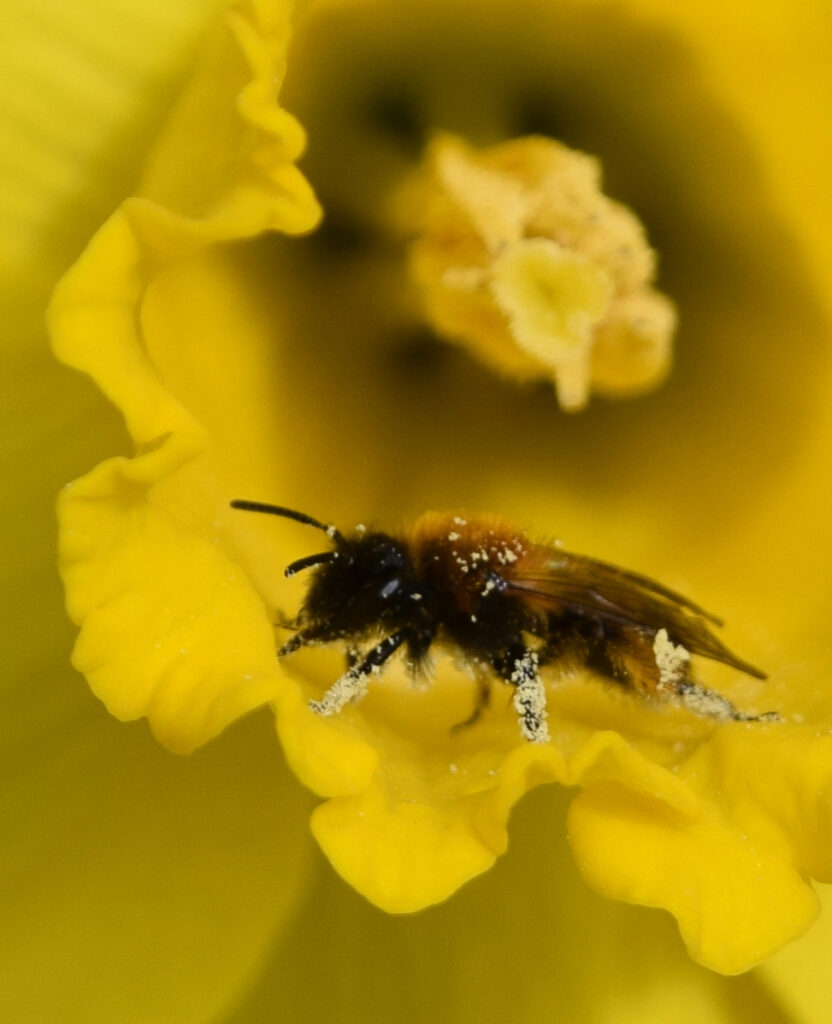
I was delighted to see a honeybee nestling in a wild daffodil in Somerset one April. We were almost eye to eye as she wiggled about, up to her knees in pollen. I read a study from 2004 that found bees can recognise human faces. I can’t recognise theirs. And the honeybee worker only lives from a couple of weeks to a few months, so I doubt we will meet again. That topic is for another poem.
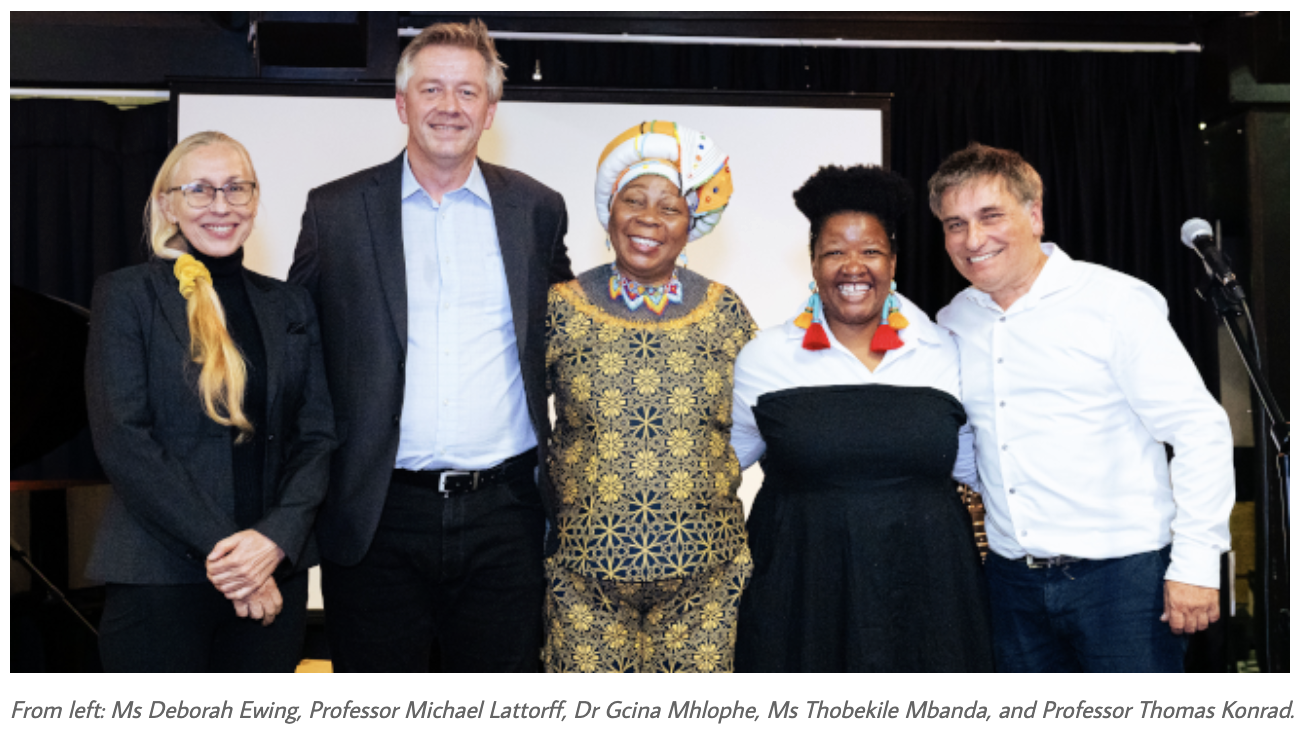
(This poem was presented at a Science and Jazz event at the Centre for Jazz and Popular Music, University of KwaZulu-Natal, in Durban on 22 May 2025).